Episode Transcript
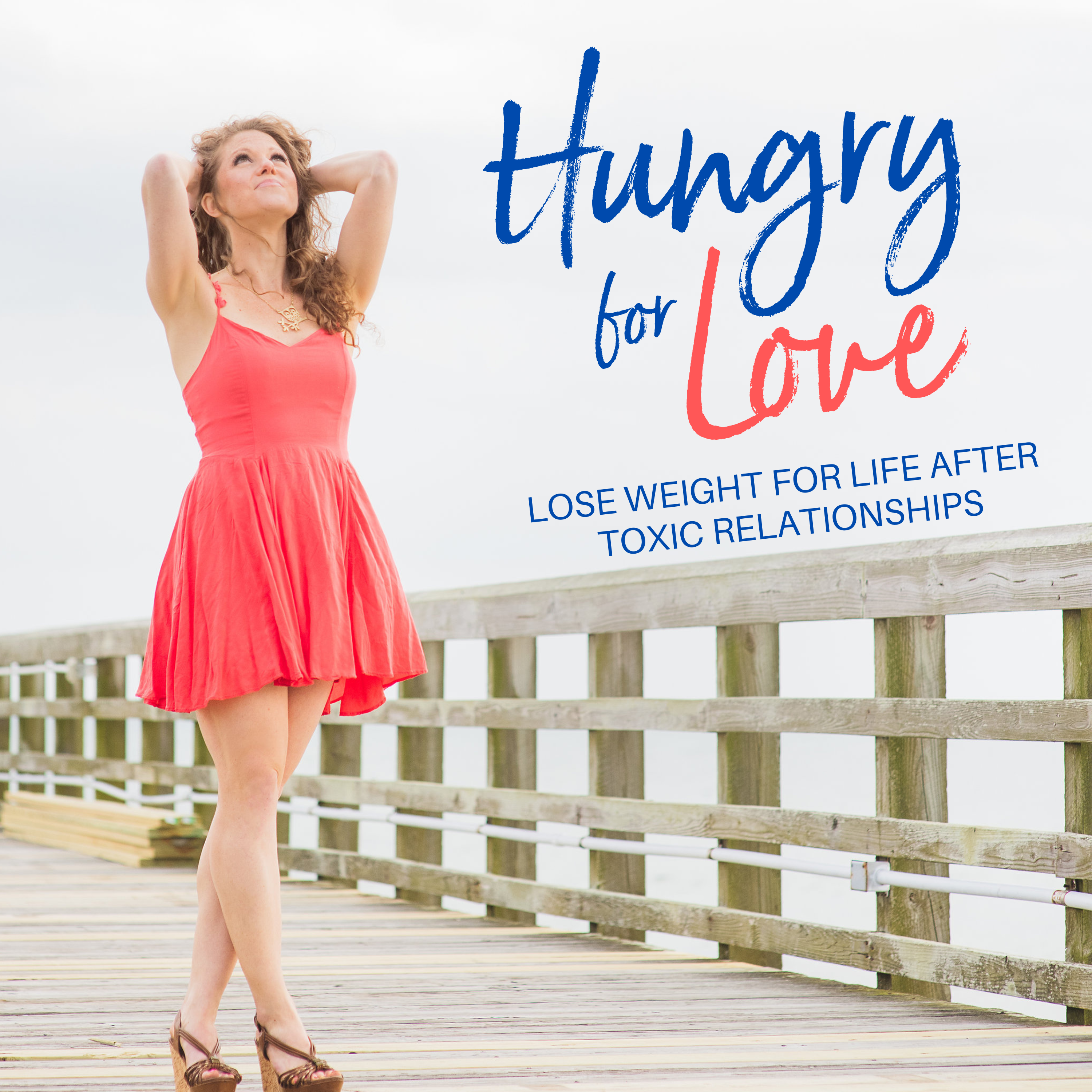
[00:00:02] Ready to lose 40 plus pounds without giving up happy hours, weekend brunches, or date nights. Then it's time to uncover the hidden link between binge eating and toxic relationships. And finally break free from both. Welcome to the Hungry for Love podcast with Jillian Scott. Y' all ready? Let's go.
[00:00:24] Hey. Hey. Welcome back.
[00:00:26] All right, so today we are gonna talk a little bit more about our nervous system and why the body won't release weight, why we can have such a hard time actually losing weight, losing inches, feeling better in our bodies when it seems like we're doing all the right things, we're eating healthy, we're exercising, maybe we're even taking it up a notch. And yet it's like our body is just holding on tighter and tighter to the weight. So I wanna explain why that has happened. If you've been white knuckling your way through a new diet, especially since January, if you started the year strong and were like, yep, this is gonna be the year, but now you're wondering why you still can't stop reaching for food or wine or snacks at 8 o'. Clock. It's not that your body is broken. It's not that you are broken, but your body is likely in survival mode. And so today we are gonna talk more about why the quote weight problem is actually a safety problem. And how this shift in energy around the spring equinox and us heading into this new season of life is actually the best reset button to finally stop the cycle. Before we dive into the how, I have a quick announcement. I have four private coaching spots that are open as of April 1st. And so last year I did the 3030 project, and those spots filled up quite quickly where I was going to help 30 people lose 30 pounds and by the end of the year. And so that concept is what I'm bringing now to this year of we have three 90 day intervals that we'll be working around. And so if you know that you want to be one of those four who are ready to do this deeper, work with me, then schedule your free consult. And that is the best place to get started, to talk more and see if this is the right fit and if this is the right time for you. Now, let's dig in. Most of us have been trained by the diet industry to believe that if we aren't losing weight, it's for one of a couple reasons. Either one, we aren't trying hard enough, Two, we don't have enough willpower, or three, it's that we haven't found the quote right Diet or some magical set of food rules where weight loss finally feels easy or it feels easy again. Because sometimes when we have done diets in the past, it seemed like it was fairly easy to stick with, and now it's harder and harder to get back to actually following the really restrictive rules either about how much or what you can eat.
[00:02:46] But these are what's actually making it harder for you to lose weight. This is making the weight loss journey and your experience worse.
[00:02:54] So instead we have to address your body's nervous system. So if you've spent most of your life in a state of fight or flight, it doesn't matter what your relationship status is now. It doesn't matter if you're out of your childhood home, if you're divorced or you're separated from the person or the people, right? These survival patterns don't live in them, they live in you. So we have to recognize and understand what are the survival patterns within me that now I can change. Because just separating, divorcing, not being in a new relationship, just not being around a toxic person doesn't change your body's survival patterns and survival mechanisms. It also doesn't do any healing, right? Like time doesn't heal all wounds. We have to be actively working in that time in order to truly heal. Until you create a sense of safety, like real deep peace and safety in your body, in your life with weight loss, with this journey, weight loss will always feel like this uphill slog through the mud while wearing stilettos, right? And like sometimes that's what it really feels like. And it can feel so frustrating because we have expectations that we're just not meeting.
[00:04:08] And every time we try to follow the age old advice of just eat less and exercise more, it doesn't get us anywhere. It's not helping. And then we have doctors also telling us this very same thing. It's not about calories in, calories out.
[00:04:23] That is a very old debunked myth. When it comes to weight loss. We do want to consider energy as a factor. However, that is not the whole story and that is not even the biggest part of the story.
[00:04:36] But for most of us as survivors, the key is actually safety and it's safety within our nervous system. And so there are a couple key components to this.
[00:04:45] So when your body is in a perpetual state of being on guard, so it's in this fight, flight, freeze response, it has all but shut down fat burning. That is essentially how your body is trying to keep you safe and alive.
[00:05:01] So number one, your body needs Physical safety in order to lose weight. From a safe perspective. Our brains are very primitive. They are designed to keep you safe because safe equals alive. Anytime we do something that is familiar, it's going to feel safe. And this is why we ended up staying in these dynamics and these relationships for so long, because it has seen, this is how I stay alive. Anything that feels unsafe, whether it's leaving that toxic relationship, or maybe it's the threat of a negative emotion, the threat of a negative circumstance, it might not even be that there's a negative one, but even just the threat of it, your brain will interpret it as we might die.
[00:05:43] Even when you are out of the environment, but you are still in this state of fight or flight. You're still highly triggered, highly anxious, around money, around your career, around parenting, around life as a whole, maybe around what other people think of you from the church or your family of origin, or just anybody in general. It's like anytime we find ourselves being triggered and in this heightened state of fight or flight, our brain can't determine and it doesn't distinguish between what's threat and what's real. It can't distinguish between what's physical pain, what's emotional pain, psychological pain. And so it just lumps everything all together.
[00:06:22] So it has this increased aversion to any type of pain, real or perceived, mental, physical, emotional. Your brain will see that as like a bear jumping out of the woods to eat you. And in moments like that, in the past, if something like that happened, our body is going to shut down fat burning. It wants to put all of the energy into, I've got to either fight this bear off or I need to run away from it. So it's now diverting energy to other places outside of digestion and metabolic function.
[00:06:54] Now when we are also in this dynamic of heightened fight or flight on a consistent basis, either from our childhood or in marriages or most of the time it's both really like we've been there both times.
[00:07:08] Our body can't distinguish what that safety feels like from a physical threat or that emotional threat. And so it shuts down everything that seems extra.
[00:07:19] So this is also why, like, sex drive decreases often when you're in abusive relationships and abusive dynamics is because that is an extra thing. And when your body is in fight or flight, when it does not feel truly safe, it's not going to have desire to procreate. It's not going to have the desire to do anything other than just basically keeping you alive.
[00:07:41] And in order to keep you alive, it wants to keep as much fat on your body as possible, so that way you can live longer. Especially if there was a famine, a world war, if you didn't know where food was coming from, if it was a really harsh winter. Right. We have to really keep in mind our brain has been designed for very primitive times, not when food has been readily and easily available. Your brain and your body have been trained that if there is a threat, it could be something that's really big, really catastrophic. We don't know where the next meal is coming from. And therefore we need to slow down digestion, metabolism and turn off fat burning. We want to save the fat and we want to keep the fat stored on our bodies because that will keep us alive longer. This is why a lot of women feel like their bodies have turned against them. They feel like they're fighting their bodies. The challenge is that we keep trying to fight back and it keeps us in a state of fight or flight. So we keep trying to fight it, keep trying to restrict it, keep putting it in this position and in this dynamic where our brain still thinks there's a famine, there's a war, something has gone terribly wrong and we aren't getting food that we need or it's not safe to lose weight, to release the weight for any number of reasons. And so from a physically biological reason, your brain has decided it's not safe. We are not releasing the weight. It wants to store energy, it wants to keep you alive longer. And it also wants to divert any energy that might already be there because we might need it. So if we gotta fight the bear, run away, we need to go harvest somewhere, we need to go and hunt like whatever it was, we need energy for this other thing over here on this side. It does not want to release the weight.
[00:09:25] It's not that you're lazy, you are not feeling at your diet, your nervous system is just trying to protect you, it's trying to keep you safe. And safe equals alive. And so even when it's emotional pain, when it's emotional abuse and we've been gaslit, there's been a lot of blame shifting. And we feel like we're always the problem. When we have the self doubt and the shame and we feel very helpless, we fall back into these same patterns of being in that heightened nervous system state. And when we aren't truly regulating and finding peace and comfort in a sustainable way, because most of us just keep trying to regulate with food, right? So until we find that sustainable way to regulate, our body's not going to have this long term safety to be able to release the weight. We need physical safety around us. So we also need like non restrictive diets that put our brains and bodies back into kind of starvation mode, thinking there is this bigger threat.
[00:10:23] We also need physical safety from the sense of being out of toxic dynamics. But we also need emotional safety. Sometimes we can leave the marriage, we can divorce a person, but we have not divorced patterns. We have not divorced coping mechanisms. We have not divorced the anxiety and the thought processes that keep us in this heightened state as well.
[00:10:45] Sometimes there are subconscious triggers when it comes to emotional safety. Maybe your mom and your sisters are always complaining about skinny people. And so there is a subconscious belief that I can't get skinny or I can't get too skinny because then my mom and my sisters are not going to like me, they're going to disown me, they're not going to want to be around me, they're going to mock me, criticize me. Now I'm going to be one of them and I want to be on the inside. I want to be part of the tribe.
[00:11:10] Our brain sometimes learns that it's not safe to lose weight emotionally. There's like a downside from an emotional perspective if I lose weight. So it might be if I lose weight, my mom and sisters won't like me anymore. Or if I lose weight, I'm going to keep attracting toxic partners instead of healthy ones. If I lose weight, I'm going to make my best friend feel bad with my success because she hasn't had any or she's really struggling with this.
[00:11:37] On the surface, logically we can rationalize through it, but from a habit brain perspective, the mental emotional side of things is like it is not truly safe to lose the weight and keep it off.
[00:11:52] Sometimes there's also more of a conscious trigger because of physical or sexual trauma that's happened. So sometimes the weight can be there as more of a protective shield of it's not safe because if I lose the weight then these bad things will happen to me. Maybe then I'll get assaulted, I'll call more attention to myself. And the attention is bad. The attention is going to come from negative people. Or it could be I'm going to call more attention from men, for example, and the only men that exist are toxic men. And I don't want that. Or I had one client where she felt very obligated to say yes if a man asked her out. So it was like, I can't say no. There's this subconscious belief of if A man asked her out, she couldn't say no, and so it was safer to keep the weight on to avoid men from asking her out. And it's like logically we recognize, okay, I don't have to say yes to every date, but there's this fear of his emotions, there's this fear and this responsibility of his negative emotions and then what he might do because of those negative emotions. And so this is again, rewiring our brain, rewiring old patterns, old habits, often that started in childhood.
[00:12:59] This is one aspect of how weight can be a shield and we have to break out of the survival mode, but also heal from the past trauma that we have truly experienced.
[00:13:09] And then the other aspect and the other way that trauma comes in and plays a role is that the trauma can also trigger binge eating or another form of self soothing that ultimately keeps the weight on. So it might be that there's a trauma trigger from something that happened to you, and now your brain has learned, I need to eat to feel better, I need to eat to re regulate. And that's because of the trauma you've experienced.
[00:13:35] This plays into piece number two, which is that our brains have simply learned that food creates a rapid, reliable and effective sense of relief, especially when it comes to regulating your nervous system when it's triggered. And this can be food, it can be alcohol, it can be a dating app, or attention from men, or if the opposite sex, it can be social media, Netflix, right? It's not so much what it is, it's the intentionality behind it that we wanna look at.
[00:14:05] So we want to be aware too of when our coping mechanisms just jump from one thing to the next rather than truly healing it from the inside out. But when we look at food, food is so often used as a way to feel better. But it's not just about saying no to food in those moments, right? It's not just about the willpower and white knuckling. It's like we have that saying no in the moment that needs to be done from a place of self, love and slowing down and not feeling so anxious and urgent in the moment.
[00:14:34] And it's part of this is also increasing your capacity to feel any emotion, to feel the vibrations in your nervous system and in your body that stem from that emotion and to learn new tools and techniques that will help you to regulate. There are many factors when it comes to losing weight after toxic relationships, and there are several where they may be more conscious and we may be more aware of what's happening, but we also Want to understand what are the subconscious drivers, what is actually driving this ship.
[00:15:05] The solution then becomes we have to activate a sense of safety. Safety with food, especially with food not being taken away, extremely restricted, not using it as punishment. And often we take away food as punishment. Sometimes, though, a binge might come on as punishment for a previous overeat or binge. So binging can be used as a punishment as well.
[00:15:29] So we want to create safety around food, of the food is not going anywhere. And this often stems from diet trauma. And so because of that, it doesn't feel safe to lose weight and to go back to these old diets. But we also need safety to feel emotions so that you no longer need food to do that for you, you no longer need food to escape emotions, and you no longer need food to re regulate you when you feel dysregulated.
[00:15:53] We also want to create safety to enjoy your life so that you're not searching for joy, pleasure or comfort at the bottom of a box of Girl Scout cookies. We need safety to truly allow ourselves to feel good, to enjoy life and to feel safe in the having of good things and safe being able to know we can maintain that, we can maintain these good things in our life as well. And we want to create safety in our bodies by letting go of dysfunctional people and dysfunctional patterns.
[00:16:23] Part of it is recognizing the people who tend to be triggers, the work environments, right? Those types of dynamics and the people who are in them to where we know we tend to get dysregulated quickly or easily. But there's also patterns within ourselves. Again, the pattern is not within them, the habit is not within them. It's within you. And so when we can recognize and see those survival patterns, we can better understand now how to address them, how to solve them.
[00:16:52] This is what I mean when I say we need to accurately address and identify what's the real underlying root problem so that we can find the real solution.
[00:17:02] Because carrying extra weight on your body is a symptom, it's not the real issue. Weight gain, overeating, these are not the real issues.
[00:17:12] If you want to lose weight and keep it off for life, we have to address the real patterns underneath it that are driving the weight gain or your body's seemingly natural resistance or avoidance of weight loss.
[00:17:26] The better we can identify our current habits, beliefs and core wounds, the better we can heal and truly from the inside out, like really understanding what's at play inside of us so that we are not turning to food or alcohol for comfort, for pleasure. To feel good, to distract ourselves, or simply as an escape.
[00:17:46] Before we go, I want to talk to the person specifically who is listening and nodding along with this, but also feeling a bit of that tug of war inside. Because you might be thinking, oh, I needed to hear this, or I need to heal from relationships and get out of this survival mode. But I also really want to lose 30 pounds. Which one do I have to do first? Can I really do both together? Maybe I need this over here. We can feel so scattered and so uncertain about what the right next step looks like for us.
[00:18:17] Or maybe you're on the other end of the spectrum and you feel so deeply stuck in survival mode, the brain fog is heavy, the perfectionism is paralyzing, and you're just so frickin exhausted that you think, I'm not ready for this. I'm not ready to lose weight. I can't handle another diet right now.
[00:18:33] And I just want to lovingly speak to this for a minute.
[00:18:38] Because if you wait until you feel, quote, ready to lose weight before you address your survival mode, we'll be waiting forever. Because survival mode is exactly what is making the weight feel impossible to lose. In the work and in the coaching that I do with clients, we don't treat these as two separate projects. It's not that, oh, we fix the relationship in April and then we fix the food in October. We heal the person who is experiencing both. This is what it's about. And if you try to lose weight while your nervous system is screaming, I'm not safe, your body will fight you every step of the way. And that's truly what happens. This is why you failed previous diets. It's why willpower feels like it's always lacking. You never have enough. It wasn't a lack of willpower or self discipline or not wanting it bad enough. It was a lack of safety.
[00:19:30] And when we can better understand and create that sense of true inner peace and safety, that's when we can lose the weight. If you are trying to heal your heart while ignoring the fact that you're using food to numb the pain, you're leaving the biggest coping mechanism unexamined. You don't have to choose. This is where I blend the best of both. We are going to heal our relationships. We are going to heal, ultimately our relationship with ourself. We are going to redefine it, heal from toxic patterns, heal from toxic people and lose weight in a way that is sustainable and long lasting by truly addressing what no other diets out there are addressing. This is what we're going to do, we're going to activate, build, compound and embody. This is the four step outline and framework that I've integrated with clients. Because we need to start by activating safety in your body first so that survival weight can finally begin to release.
[00:20:27] And then we build this self concept that allows you to set boundaries without running to the pantry afterwards, while also then building the habits that are going to lead you ultimately where you want to go. Building new habits around food, around exercise, around alcohol, around holidays or travel.
[00:20:47] From there, we let these now compound, we build that momentum so that we can keep compounding it until it becomes embodied just a part of who we naturally are. You don't have to be perfect. I think this is one of the biggest myths, is that we feel like, and really we've been trained by most diets that we have to be perfect. So I'm not gonna start this until I can be perfect. And I wanna just remind you, perfection is not required.
[00:21:14] Anytime you try to do something and do it from a place of perfection, you will always lose the result that you've created, doesn't matter what it is.
[00:21:23] So it's not about being perfect, but we have to choose to be ready. And sometimes we just need to simply acknowledge like, we're tired of these same cycles, we're tired of these same patterns. We're ready to do something different and we are truly ready for a change. Not just looking at what's going to change in the next three months, but what's going to change over the next 30 years. When you give this to yourself, it's really easy to get caught up in the here and now, in the instant gratification, but we really want to look at, okay, what am I doing over the next three months, the next 12 months, that's going to help and light up the next 30 or maybe 40 years. We have so much time left here on this earth and to really spend time healing is going to make the decades to come so much better, so much more enjoyable, so much easier.
[00:22:12] If you would like to learn more about working with me and taking one of these four spots that open in April, your next best step is to schedule a free consultation. Visit bodyucrave.com schedule and as always, the link will be in the description. But we're going to talk through where you are now, what your recent diet trauma and relationship trauma has been so that I can help you build out a path forward so that you see, here's what the steps look like. Knowing that there is this aspect of recognizing if you're in survival mode, how to truly step out, to stop fighting, to stop resisting and give yourself the time and the space and the energy to truly heal. And I'd love to be a part of that journey with you. I'll see you in the next episode. Here's to creating the life and body you crave.
[00:23:03] If this episode resonated with you, it's time to break free from destructive cycles around food, alcohol and toxic relationships. Your next step?
[00:23:12] Book your free Break the Cycle call where you'll finally see why your binge eating and relationship patterns are so deeply connected and how to break free from both for good.
[00:23:23] You'll walk away with fierce clarity and a game plan to step into a life full of fun, adventure and self love. Grab your spot now at www.bodyyoucrave.com.
[00:23:38] it's time to Break the cycle. I'll show you how.